BLOG
The Ancient Practice That Modern Science Cannot Stop Talking About
Why breathwork is not a trend — it is the foundation of human healing, performance, and longevity. And the research is finally catching up.
You breathe roughly 20,000 times a day. Most of those breaths happen without a single conscious thought. Air moves in. Air moves out. Your body does what it has always done, and you go about your life.
But what if you were told that the way you breathe — the depth, the rhythm, the intention behind it — could fundamentally change your biology? That a single breathwork session could reduce your stress hormones by over 40 percent, drop inflammation below lab-detectable levels, and triple neuroprotective markers linked to brain longevity?
What if the most powerful healing tool you will ever have is the one you were born with?
This is not a wellness fad. This is not a social media trend that will be replaced by the next one in six months. Breathwork is an ancient practice with thousands of years of history across every major healing tradition on the planet — and in the last decade, modern neuroscience has started producing data that confirms what practitioners, healers, and communities like Luminate have known all along.
When the heart softens, the body follows. When the mind relaxes, the cells repair. When the spirit opens, the biology responds.
This is the story of breathwork — where it came from, what the science says, why it matters more now than ever, and how Luminate is building a movement around it.
Breathwork Is Not New. It Is Ancient.
Long before anyone had a lab or a research grant, human beings understood that breath was more than biology. It was life force. It was spirit. It was the bridge between the body and something larger.
In Sanskrit, the word for breath is prana — which also means life energy. In ancient yogic tradition, pranayama (the practice of breath control) was considered one of the eight limbs of yoga and was believed to purify the body, calm the mind, and prepare the practitioner for higher states of consciousness. These practices date back over 3,000 years.
In Chinese medicine, breath is tied to qi — the vital energy that flows through the body’s meridian system. Qigong, a practice that combines movement, meditation, and controlled breathing, has been used for over 4,000 years as both a healing modality and a path to spiritual cultivation.
Indigenous cultures across the Americas, Africa, and Oceania have used rhythmic breathing in ceremony, initiation rites, and healing rituals for millennia. Holotropic breathwork, developed by psychiatrist Stanislav Grof in the 1970s, drew directly from these traditions — using accelerated breathing patterns to induce non-ordinary states of consciousness for therapeutic purposes.
The Wim Hof Method, Transformational Breath, Rebirthing Breathwork, Shamanic Breathwork, Soma Breath — the modern landscape is rich with modalities, but they all trace back to the same fundamental insight:
How you breathe determines how you live. Change the breath, and you change the body. Change the body, and you change the mind. Change the mind, and you change everything.
Your Nervous System Is Running the Show. Breath Is the Override.
To understand why breathwork is so powerful, you need to understand the autonomic nervous system — the part of your biology that operates without your conscious input.
The autonomic nervous system has two primary branches:
The sympathetic nervous system is your accelerator. It governs the fight-or-flight response — the cascade of hormones, muscle tension, elevated heart rate, and hyper-alertness that prepares your body to respond to danger. This system was designed to save your life. The problem is that modern life has turned it into your default setting.
The parasympathetic nervous system is your brake. It governs rest, digestion, repair, and recovery. This is the state where your body heals, your immune system strengthens, your hormones balance, and your brain consolidates memory and processes emotion. This is where longevity lives.
Most people spend the vast majority of their waking hours in sympathetic dominance. The constant stimulation of notifications, deadlines, news cycles, social comparison, financial pressure, and relational stress keeps the accelerator pressed down. Even when you think you are relaxing — scrolling on the couch, watching television, lying in bed unable to sleep — your nervous system is often still running in a low-grade state of activation.
Breathwork is one of the most direct ways to shift from sympathetic to parasympathetic dominance. Unlike meditation, which works primarily through the mind, breathwork works through the body first. It changes the biochemistry of your blood, the rhythm of your heart, and the tone of your vagus nerve — the largest nerve in your parasympathetic system — in real time.
This is not theory. This is physiology. And the clinical data now supports it with extraordinary clarity.
What the Science Actually Shows
The last decade has produced a surge of peer-reviewed research on breathwork and its measurable effects on human biology. Here is what the data says:
Cortisol and Stress Hormones
Cortisol is the body’s primary stress hormone. In healthy amounts, it helps you wake up in the morning and respond to acute challenges. In chronic excess, it accelerates aging, disrupts sleep, promotes fat storage, weakens immunity, and contributes to anxiety and depression.
Structured breathwork sessions have been shown to reduce cortisol levels by as much as 42 percent in a single sitting. DHEA-S, another stress-adaptation hormone, has shown drops of 45 percent following breathwork, indicating a deep systemic shift from stress to recovery.
Inflammation
Chronic low-grade inflammation is now recognized as one of the root drivers of nearly every major disease — cardiovascular disease, autoimmune conditions, metabolic syndrome, mood disorders, neurodegeneration, and accelerated aging.
Research has shown that breathwork can reduce key inflammatory markers including hsCRP (high-sensitivity C-reactive protein), TNF-alpha, and IL-6. In some cases, hsCRP has dropped below detectable lab thresholds after a single session — a reduction of over 35 percent from already low baseline levels.
If inflammation is the slow-burning fire inside the body, breathwork may help extinguish the flame.
Neuroprotection and Brain Health
Perhaps the most surprising finding in recent breathwork research involves estradiol — a hormone critical for brain health in both men and women. Estradiol supports synaptic growth, neuroplasticity, memory retention, emotional stability, and neuroinflammation reduction.
Following breathwork-adjacent experiences, estradiol levels have been observed to more than triple — without altering testosterone balance. This is significant because it suggests that breathwork may activate neuroprotective pathways through serotonin receptor stimulation and aromatase activity, offering a natural mechanism for long-term cognitive health.
Heart Rate Variability
Heart rate variability (HRV) is one of the most reliable biomarkers for overall health, stress resilience, and longevity. Higher HRV indicates a more adaptive, resilient nervous system. Lower HRV is associated with chronic stress, cardiovascular risk, and accelerated aging.
Breathwork has been consistently shown to improve HRV — both acutely during sessions and chronically with regular practice. This means that breathwork does not just make you feel better in the moment. It structurally changes how your nervous system responds to stress over time.
Mental Health
Clinical trials have demonstrated that breathwork interventions can produce statistically significant reductions in anxiety, depression, and PTSD symptoms. In some studies, the effects of a single breathwork session were comparable to weeks of traditional cognitive behavioral therapy.
Researchers believe this is because breathwork bypasses the cognitive mind and works directly on the somatic and emotional systems where trauma and stress are stored. You do not have to think your way out of anxiety. You can breathe your way through it.

Breathwork Is Not Just a Technique. It Is an Ecosystem.
At Luminate, we believe that breathwork is most powerful when it exists within a broader ecosystem of healing practices. This is why the work we do goes far beyond a single modality.
The Luminate approach integrates:
Breathwork as the core practice for nervous system regulation and emotional release
Somatic movement to discharge stored tension from the body’s fascia and muscular system
Sound healing using crystal bowls, gongs, and live vocals to entrain brainwave patterns into theta and delta states
Ceremonial cacao to open heart-centered connection and promote cardiovascular flow
Community as medicine — the research-backed understanding that human connection itself is a regulatory force for the nervous system
Integration practices including meditation, journaling, and guided reflection
Science-informed education so that members understand not just what they are feeling, but why
This multidimensional approach is grounded in a simple truth: healing is not one-dimensional. It is not just supplements or cold plunges or meditation or therapy. It is an ecosystem of practices that regulate the nervous system, expand consciousness, and reconnect us to ourselves.
The future of longevity is not a pill. It is a practice. And that practice begins with breath.
Who Is Breathwork For?
One of the most common misconceptions about breathwork is that it is only for experienced meditators, yoga practitioners, or people who already identify as spiritual. This could not be further from the truth.
Breathwork is for:
Athletes who want to optimize recovery, manage performance anxiety, and access flow states without burnout
Entrepreneurs and leaders carrying the invisible weight of constant decision-making and high-stakes pressure
Parents who are running on empty and have forgotten what it feels like to be present in their own bodies
Veterans and first responders dealing with the physiological imprint of trauma and chronic hypervigilance
Therapists, healers, and caregivers who pour into others all day and rarely create space to receive
Students and young adults navigating anxiety, identity, and the relentless pressure of modern digital life
Anyone who has ever felt disconnected from themselves and wondered if there was a way back
You do not need to be flexible. You do not need to meditate. You do not need to believe anything specific. You just need lungs and a willingness to use them with intention.
The Luminate Community: Where the Practice Becomes a Way of Life
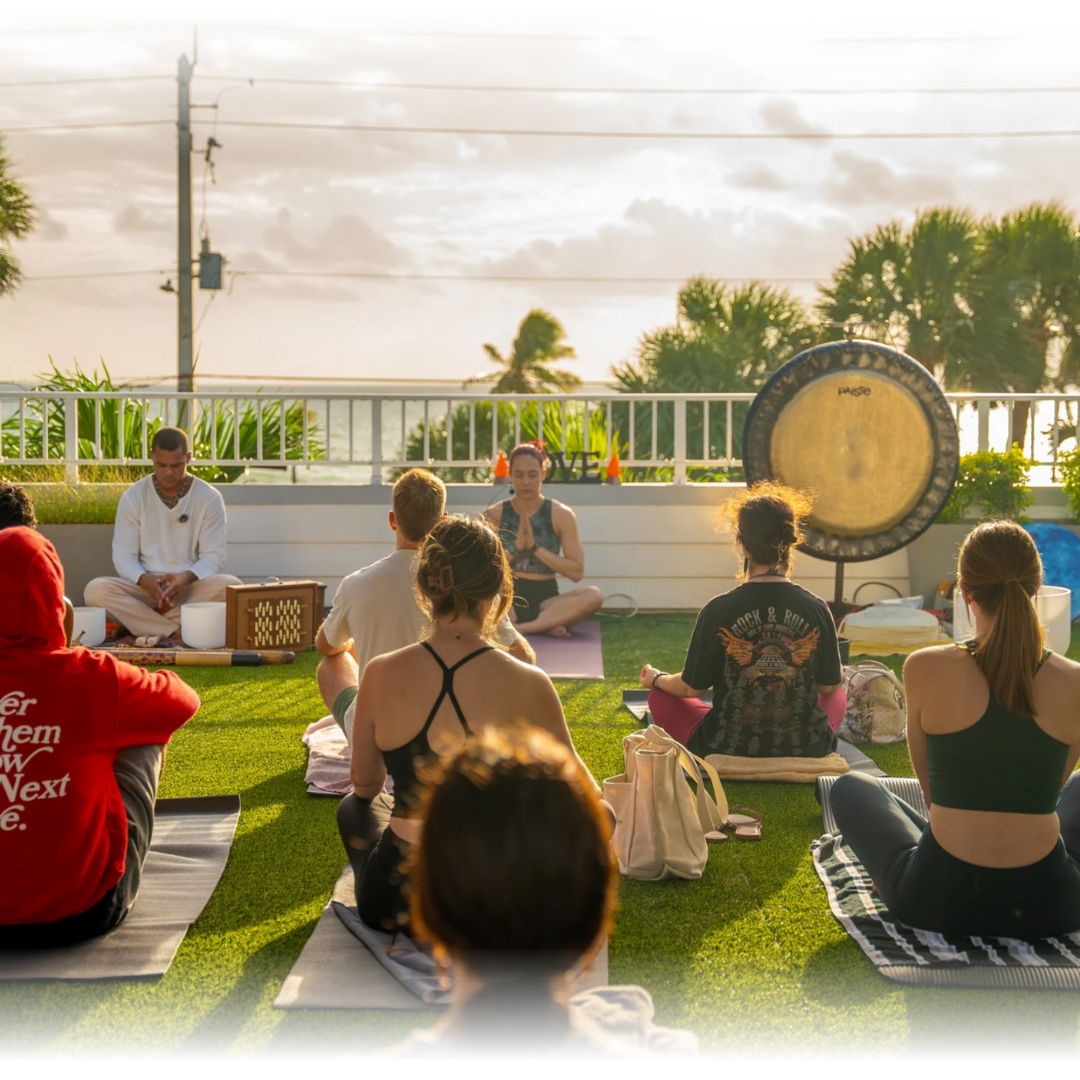
A single breathwork session can open a door. But real transformation — the kind that changes how you show up every day, how you handle stress, how you connect with the people you love, how you sleep, how you perform — that happens through consistent practice within a supportive community.
This is exactly what the Luminate Community was built for.
Inside the community, members get access to:
Jordan Poyer’s exclusive meditation and breathwork library — five guided sessions designed for different states and intentions
Weekly livestreams with the Luminate facilitation team covering breathwork technique, nervous system education, integration practices, and open Q&A
The Beacon — a monthly newsletter and video digest curated by the founding team with the latest in consciousness research, community spotlights, and personal reflections
Community circles and live calls for real human connection — not another comment section, but actual conversation
Interviews, workshops, and teachings not released publicly — deep dives into topics like somatic healing, psychedelic research, longevity science, and more
Training on nervous system health, emotional regulation, and building sustainable energy and clarity
The community is not a content library. It is a living, breathing container held by people who care deeply about this work and about each other. It is the place where the peak experience becomes a baseline. Where insights become habits. Where strangers become your people.
Jordan Poyer — breathwork guide, integration mentor, former professional athlete, and co-founder of Luminate — built this community from his own healing journey. After discovering the transformative power of breath, movement, and ceremony in his own life, he committed to creating a space where others could experience the same thing. Not in isolation. In community.
Join the Luminate Community → community.luminate.me
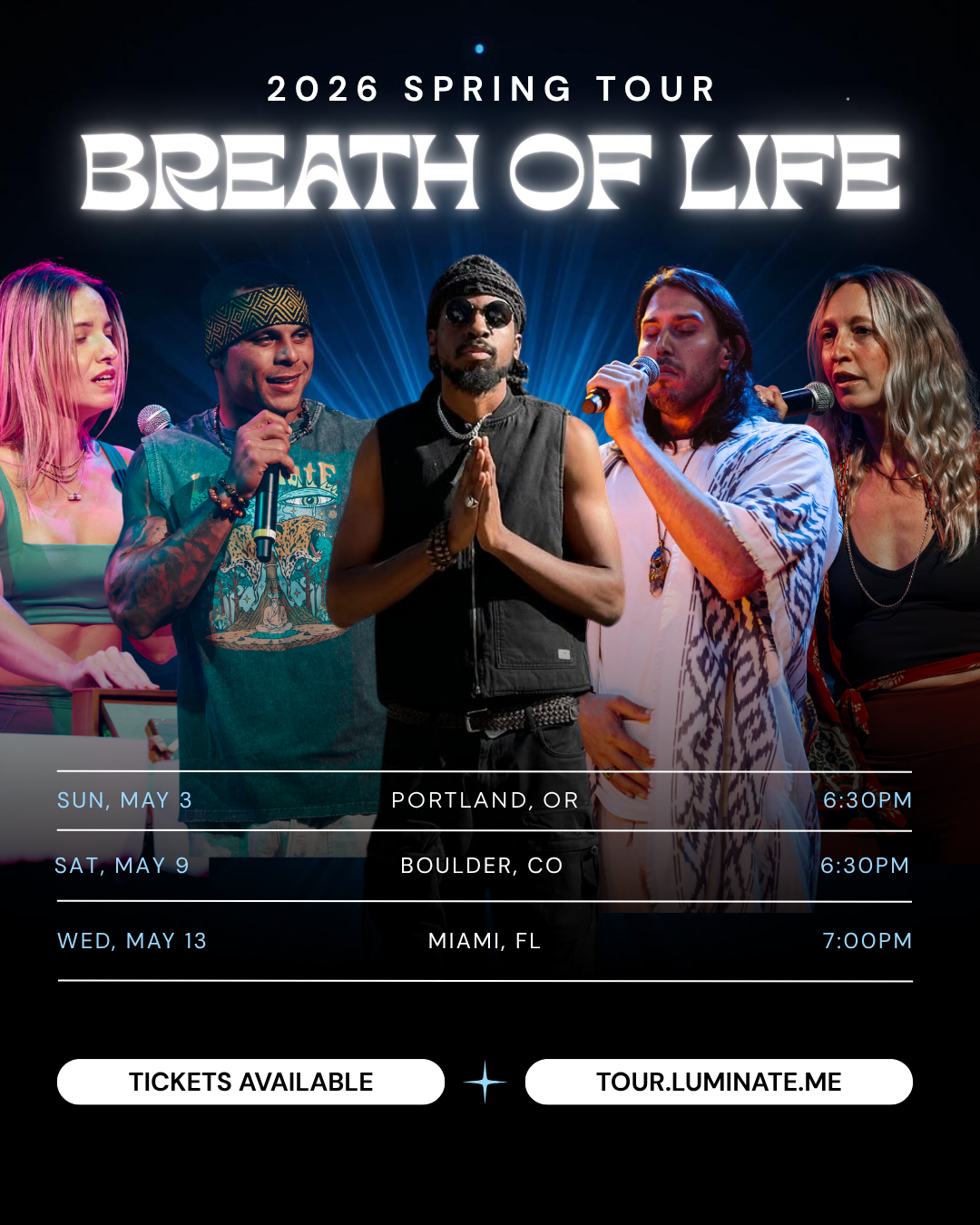
Experience It Live: The Breath of Life Tour
Reading about breathwork is one thing. Experiencing it in a room full of people who are all breathing, moving, and healing together is something else entirely.
The Breath of Life Tour is Luminate’s flagship live experience — a multi-sensory ceremonial concert that weaves together everything we have talked about in this article into one immersive evening. Cacao ceremony. Ecstatic movement. Sonic breathwork fused with modern music production. Sound healing with crystal bowls and live vocals. And a live musical performance that turns the whole room into a celebration of what it means to be alive.
The Spring 2026 tour is hitting three cities:
Portland, Oregon — May 3
Boulder, Colorado — May 9
Miami, Florida — May 12
Each event is supported by 8 to 10 trauma-informed space holders who go through a formal application, interview, and onboarding process. Your safety and emotional wellbeing are not afterthoughts. They are built into the architecture of the experience.
We are also proud to announce that the Breath of Life Tour is now formally partnered with MAPS — the Multidisciplinary Association for Psychedelic Studies — as a founding partner. MAPS has spent 40 years at the forefront of consciousness research, and this collaboration reflects a shared commitment to bridging ancient healing wisdom with modern science. The formal announcement drops on April 8th, MAPS’s 40th anniversary.
Whether you are a first-timer or a lifelong practitioner, whether you come alone or bring your entire circle, whether you arrive skeptical or open-hearted — the Breath of Life experience will meet you exactly where you are. That is the design. That is the promise.
Get Your Tickets → tour.luminate.me
The Invitation
You have been breathing your entire life. Every single moment. Through every joy, every grief, every fear, every triumph, every quiet Tuesday afternoon where nothing happened and everything was fine. Your breath has been there.
The question is whether you have been there with it.
Breathwork is an invitation to come home. Not to some idealized version of yourself. Not to a place you have never been. But to the center of who you already are — underneath the noise, the obligations, the identity you built for other people, the tension you carry in your shoulders that you have stopped noticing because it has been there so long.
This is not about becoming someone new. It is about remembering who you were before the world told you to hold your breath.
Every inhale is a return. Every exhale is a release. This is how we rise. — Jordan Poyer
The Luminate community is here. The Breath of Life Tour is live. The science is clear. The facilitators are ready. The space holders are trained.
All that is missing is your next breath.
Take it.
GET BREATH OF LIFE TOUR TICKETS
Portland (May 3) | Boulder (May 9) | Miami (May 12)
luminate.me | @lumaborneoflight | community.luminate.me

Copywrite 2026. Conscious Living Network. All Rights Reserved.
PRIVACY POLICY | TERMS OF USE